
Quick update on the NES build, which stays a 1991 game on the outside and plays more like today’s NFL on the inside. Since Update #5, the weather has arrived, the crowd wears the home team’s colours, the stats screens look like a real broadcast, and the season ends with awards.
The short version:
- Rain and snow change the look of the field, and the players handle worse in bad weather.
- The crowd wears the home team’s colours, with cheerleaders to match.
- Halftime and final stats pages with team numbers and stat leaders.
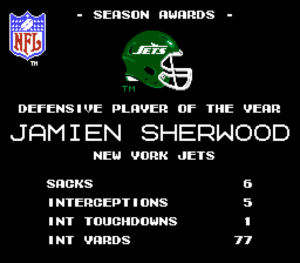
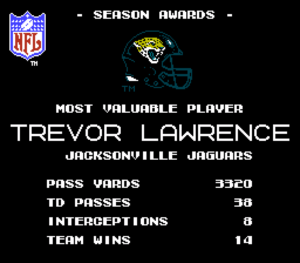
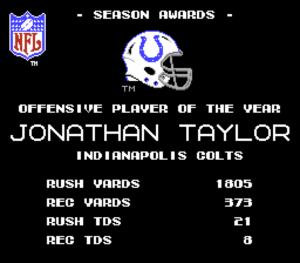
- Season awards: MVP, Offensive and Defensive Player of the Year and Rookie of the Year.
- Kickers and returners play like their own ratings.
- Swap your defensive starters, use your return team and look at any player’s card.
Rain, snow and the crowd
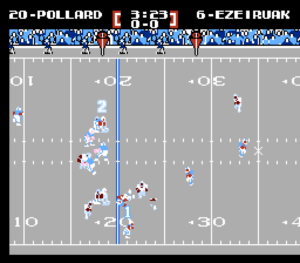
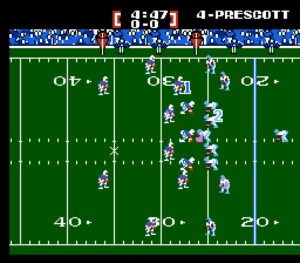
Bad weather now looks and plays like bad weather. In snow the field turns light grey, and in rain it goes a dark, wet green, while the lines, numbers and end zones stay easy to read. Players also handle worse in the wet and the cold: their ratings drop a little, except top speed and a quarterback’s passing speed. Domes stay clear, and the OPTIONS page can turn the weather off.
The crowd now wears the home team’s colours, with a second colour for the clubs that have one, and the cheerleaders match. Denver’s stands read orange, not blue.
Stats like a real broadcast
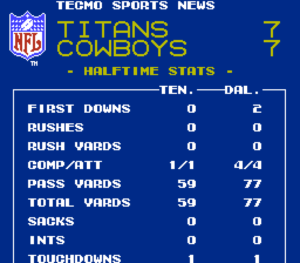
At halftime and at the end, the game shows a stats page with each team’s numbers and the stat leaders: rushing, passing, receiving, sacks, interceptions and kicking. In a game you play yourself, the page scrolls down by itself and then lets you move it up and down. On a simmed game, the scoreboard fades out cleanly before the stats come up.
Season awards
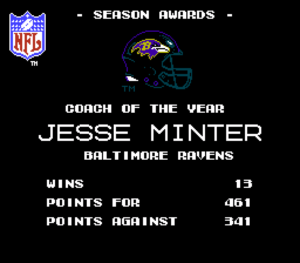
At the end of the year the game hands out its awards: MVP, Offensive Player of the Year, Defensive Player of the Year and Rookie of the Year, each with a winner chosen from the season’s numbers. Rookies can be set in the editor.
Players play like their ratings
Kickers now follow their own leg: a short kicker can’t boom a 57-yard field goal. Kick and punt returners run at their own speed, so a fast returner is fast. A passer’s accuracy and a defender’s coverage follow their ratings, and computer ball carriers read the defense and cut away from tacklers instead of running straight into them.
More control for you
On the defensive starters screen you can swap a bench player into any starting spot and pick your return team. Press a button on any player and his card comes up, on both the offense and defense screens. The Pro Bowl uses the right positions for its rosters.
What’s next
Still being worked on, and not promised for December 13: a bigger playbook, more plays picked for each slot, and an upgrade to the end zones. A final round of testing comes first, from December 1 to 12.
Credits
This is built on bruddog’s disassembly of the 1991 game (with jstout), TSB Tool by BAD_AL, art by SheepdogXIX, Richard (rayoung269) and lpotter, ideas and testing from COA Elway, dgreen28, and Drunken Gamer. Thank you all.